
One Engineer. One Obsession.
One Breakthrough.
40 years of valve engineering, relentless curiosity, and one pivotal observation led to a valve that shouldn’t exist.
Chapter 1
The Fight
After 20 years of engineering precision control valves, Mark Lobo was challenged to beat cavitation. He saw the same cycle repeat in every plant he visited: install a new valve, watch it fail within 18 months, or as soon as 10 days
Cavitation wasn’t just a technical nuisance—it was a billion-dollar industry plague. Every major valve manufacturer had tried to solve it with exotic materials, stacked trim, multi-stage pressure reduction. None of it worked. Not really. They were treating symptoms while the disease raged on.
Mark didn’t accept that. He couldn’t. Every failed valve he pulled from service was a personal affront—proof that the engineering world had settled for “good enough” when “good enough” meant millions in unplanned downtime.
Chapter 2
The Observation
It started worldwide test facilities. Mark spent years studying how fluids behaved under extreme conditions—in labs and industrial applications, watching what actually happened when 5,000 PSI of fluid slammed through a control valve trim.
He observed textbook conditions and treated them as a problem. The problem wasn’t pressure drop itself. It was the asymmetry of how pressure recovered. Conventional globe valves created chaotic, one-sided flow paths that concentrated energy in all the wrong places. The fluid fought the valve, and the fluid always won.
What if, instead of fighting the fluid, you worked with it?
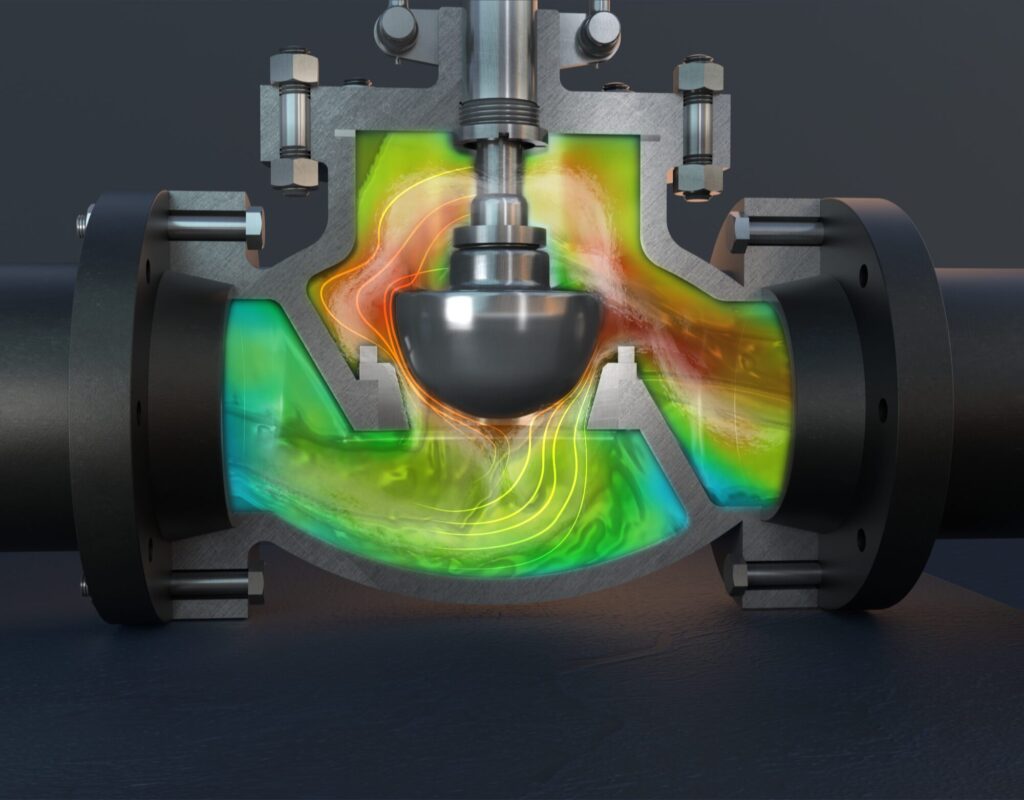
Chapter 3
The Eureka Moment
The connection came from three separate threads that Mark had been pulling for years:
The Venturi Principle
A diverging-converging flow path that controls pressure drop smoothly and predictably — no turbulence, no cavitation.
Globe Valve Architecture
The proven mechanical framework of the globe valve, which had been the industry standard for a century, just with the wrong flow geometry.
Internal Actuation
Instead of bolting on an external gearbox, what if the actuation mechanism lived inside the valve body itself? Simpler, more compact, and inherently more reliable.
The eureka moment was connecting these three ideas into one: an axisymmetric, internally actuated control valve that distributed pressure energy uniformly though an annular flow path. No asymmetry. No cavitation. No noise.
Chapter 4
The Creation
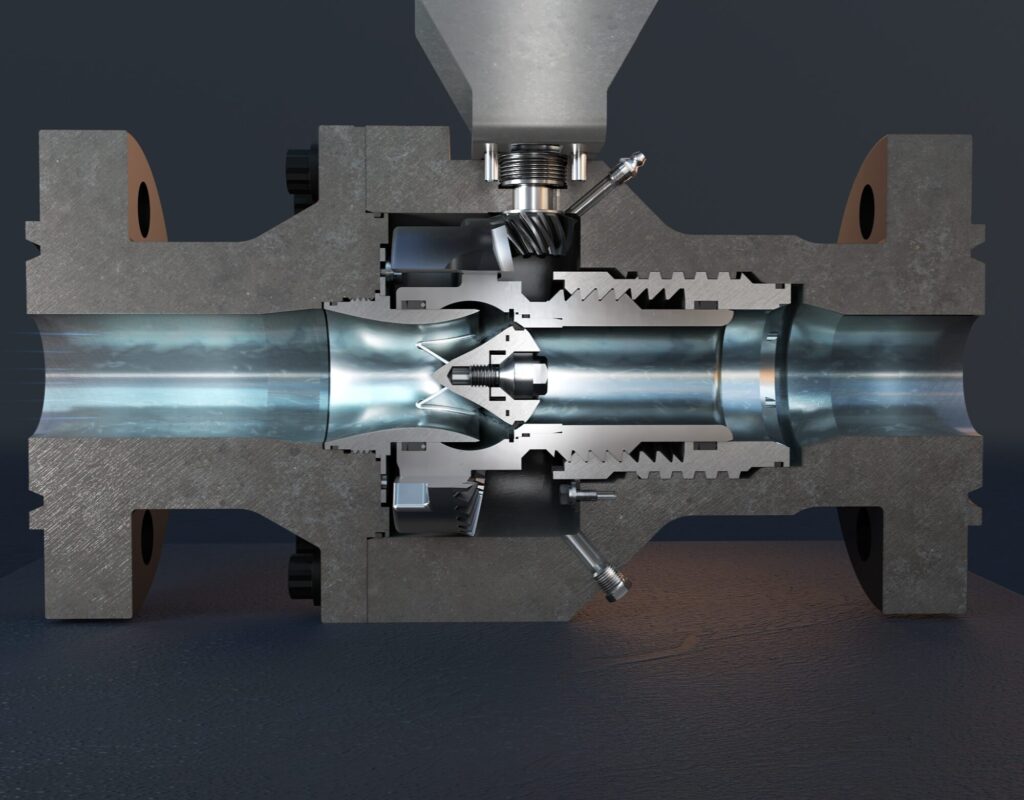
In 2015, VSI — Valve Systems International — was born. Mark assembled a small team of engineers who shared his obsession and got to work building the first Atlas prototype.
The field tests exceeded every expectation. The valve operated at pressures and conditions that destroyed conventional valves in weeks—and it came out clean. No cavitation damage. No erosion. Noise levels that made operators check their instruments twice because they didn’t believe the readings.
The US Patent Office granted Patent 9,103,421 followed by Patent 9,404,561, protecting the core innovations of the Atlas SSCV technology.
Over the next decade, the Atlas was deployed in oil & gas, and industrial applications across the United States. Every installation confirmed what the prototypes had shown: this valve simply works.
Hear It From the Inventor
Mark Lobo tells the story behind the Atlas SSCV in his own words.
Video coming soon — Mark Lobo: The Atlas SSCV Story
The Team Behind Atlas
A small, focused team of engineers dedicated to solving the hardest problems in flow control.
Mark A. Lobo, P.E.
Founder & Chief Engineer
40+ years in valve engineering. Inventor of the Atlas SSCV. Licensed Professional Engineer. US Patents 9,103,421 & 9,404,561.
Engineering Team
Valve Design & Testing
Dedicated specialists in severe service flow control, CFD simulation, and field testing.
Field Operations
Installation & Support
Hands-on support from commissioning through the full lifecycle of every Atlas valve deployment.
Book Your Free Valve Audit
Let our engineering team analyze your severe service application and show you what the Atlas SSCV can do for your operation.